
Willow Trees Solutions
Willow Tree Problems
Willows are vigorous-growing trees and their extensive root systems can sometimes cause problems when trees are planted too close to buildings, drains, paths or other structures.
Large branches can also become hazardous when they are dead, damaged or weakened by storms.
Regular inspection and appropriate tree care can help identify potential problems before they become serious.
Willow Tree Services from Eco Tree Solutions
Eco Tree Solutions provides professional tree care for willow trees and other species throughout Essex.
Willow Tree Pruning
Pruning can remove dead, damaged or unwanted branches while helping to maintain the tree's structure, appearance and safety.
Crown Reduction
Where appropriate, crown reduction can reduce the overall size and spread of a willow while retaining its natural form.
Crown Thinning
Selective removal of branches can reduce the density of the crown and allow more light through without unnecessarily changing the tree's overall shape.
Height Reduction
Large willows can grow rapidly and may become too large for their surroundings. Professional height reduction can help manage the tree where appropriate.
Deadwood & Branch Removal
Dead or damaged branches can present a safety risk, particularly during periods of strong winds. Removing hazardous branches can help reduce the risk to people and property.
Willow Tree Felling & Removal
Where a willow has become unsafe, is severely damaged or cannot reasonably be retained, professional felling or dismantling may be required.
Large willows can require careful sectional dismantling because of their size, location and heavy branches.
Stump Grinding
Following willow removal, stump grinding can remove the remaining stump and make the area easier to landscape, replant or reuse.
Professional Willow Tree Advice
Every willow tree is different. The appropriate work depends on its species, size, condition, location and surrounding environment.
Eco Tree Solutions can assess your willow and recommend the most suitable course of action, whether that means pruning, crown reduction, crown thinning, branch removal, tree removal or stump grinding.
If you have a willow that has become too large, has damaged branches or is causing problems around your property, contact Eco Tree Solutions for professional advice and a free, no-obligation quotation.
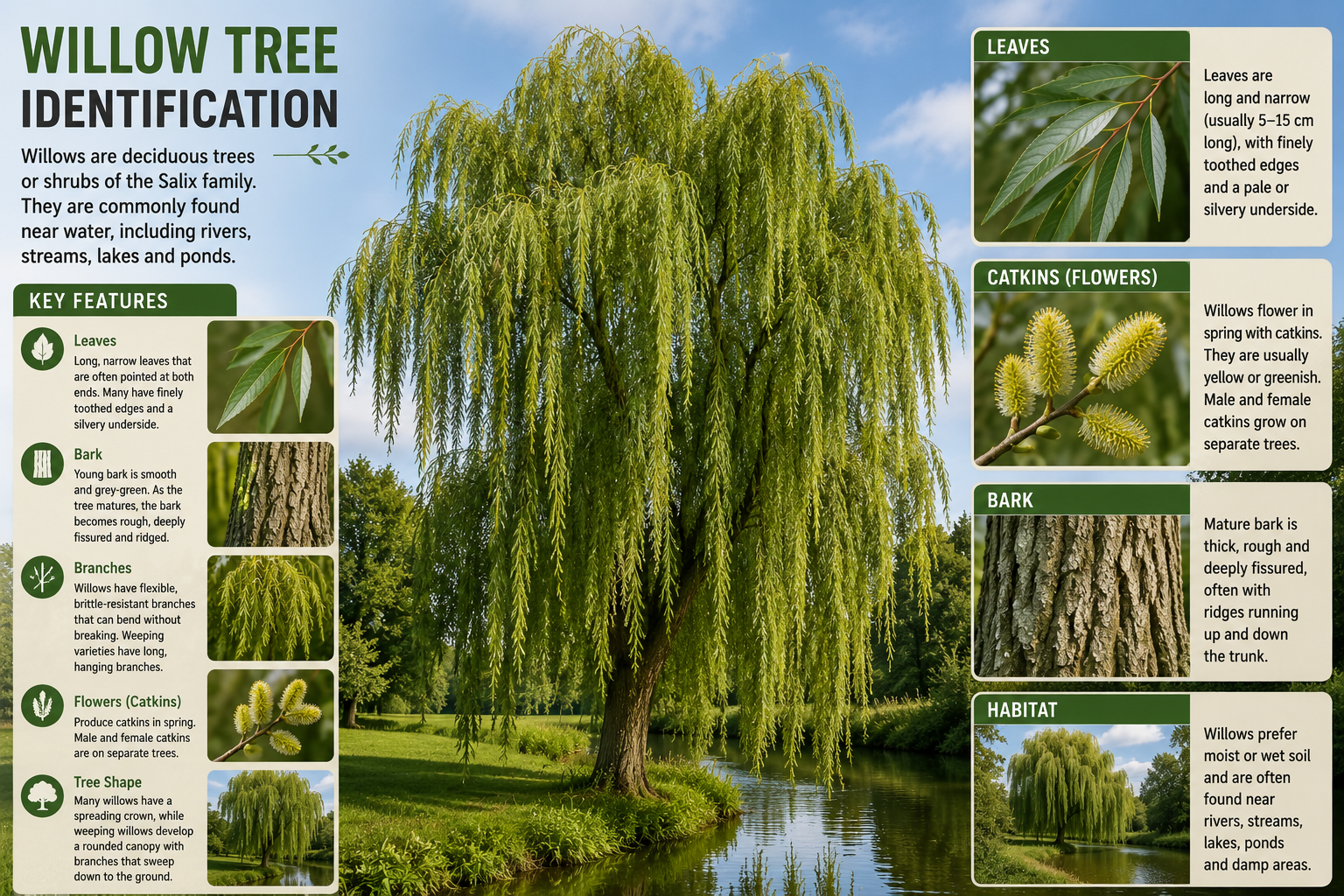
Identifying a Willow Tree
Willows are a group of deciduous trees and shrubs from the Salix family. They are particularly associated with damp ground, riverbanks, ponds, streams and other wet areas.
Several willow species can be found across the UK, ranging from small shrubs to large mature trees.
What to Look For
Leaves:
Willow leaves are usually long and narrow, although their shape varies between species. Many have finely toothed edges and a lighter or silvery appearance underneath.
Bark:
Young willow trees generally have smooth bark. As they mature, the bark can become rougher, deeply fissured or ridged depending on the species.
Branches:
Willows are known for their flexible branches. Some varieties, particularly weeping willows, develop long, hanging branches that create their distinctive appearance.
Flowers:
Willows produce flowers known as catkins, which appear in spring. Male and female flowers are usually found on separate trees.
Tree Shape:
Mature willows can develop large, spreading crowns and substantial trunks. Their fast growth means branches can sometimes become large, heavy or vulnerable to damage.
Get In Touch
- 07955 440 630
- twiggy.burgess694@googlemail.com
- 52 Oakley Ave, Rayleigh SS6 9TE


